


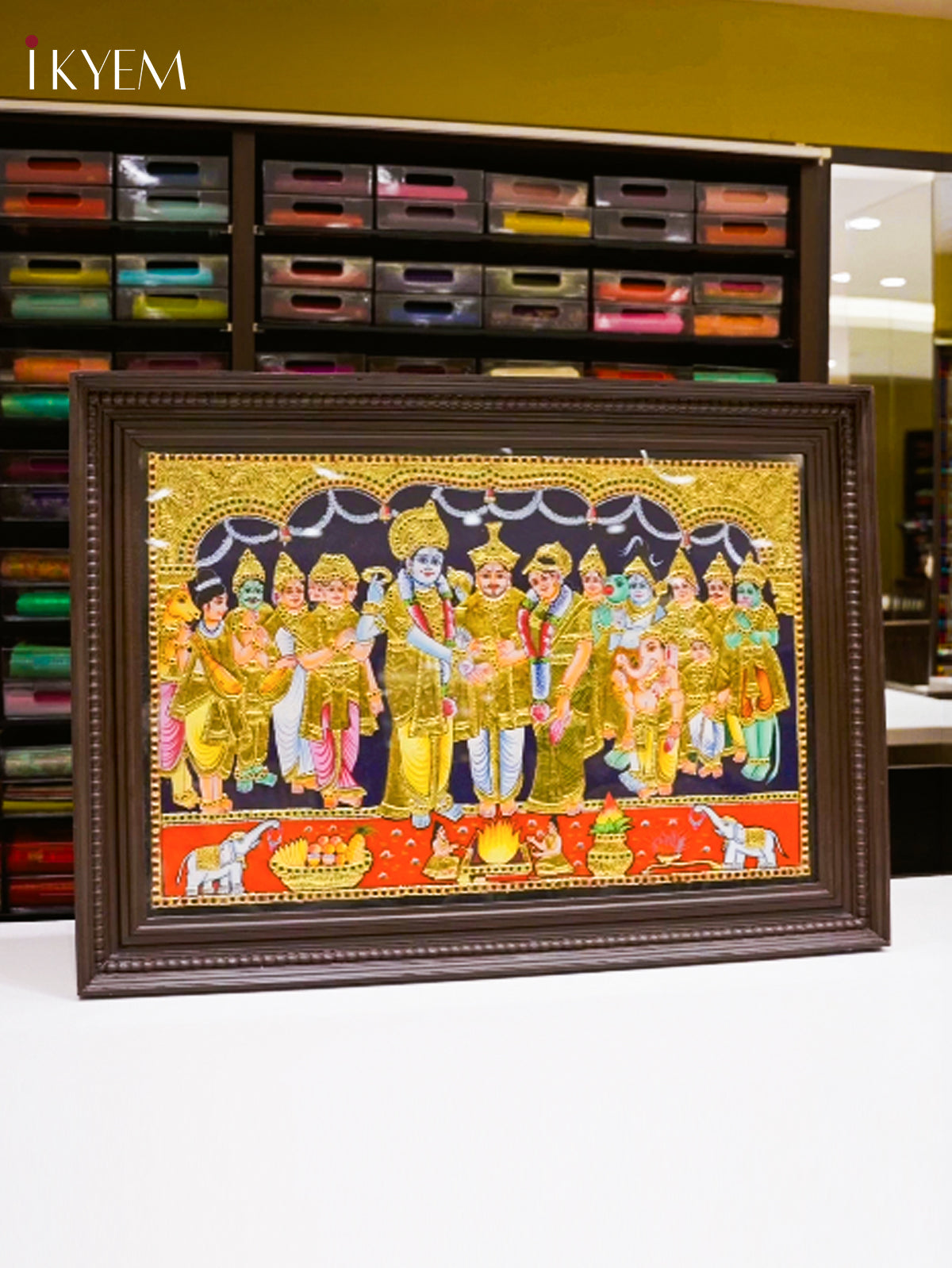
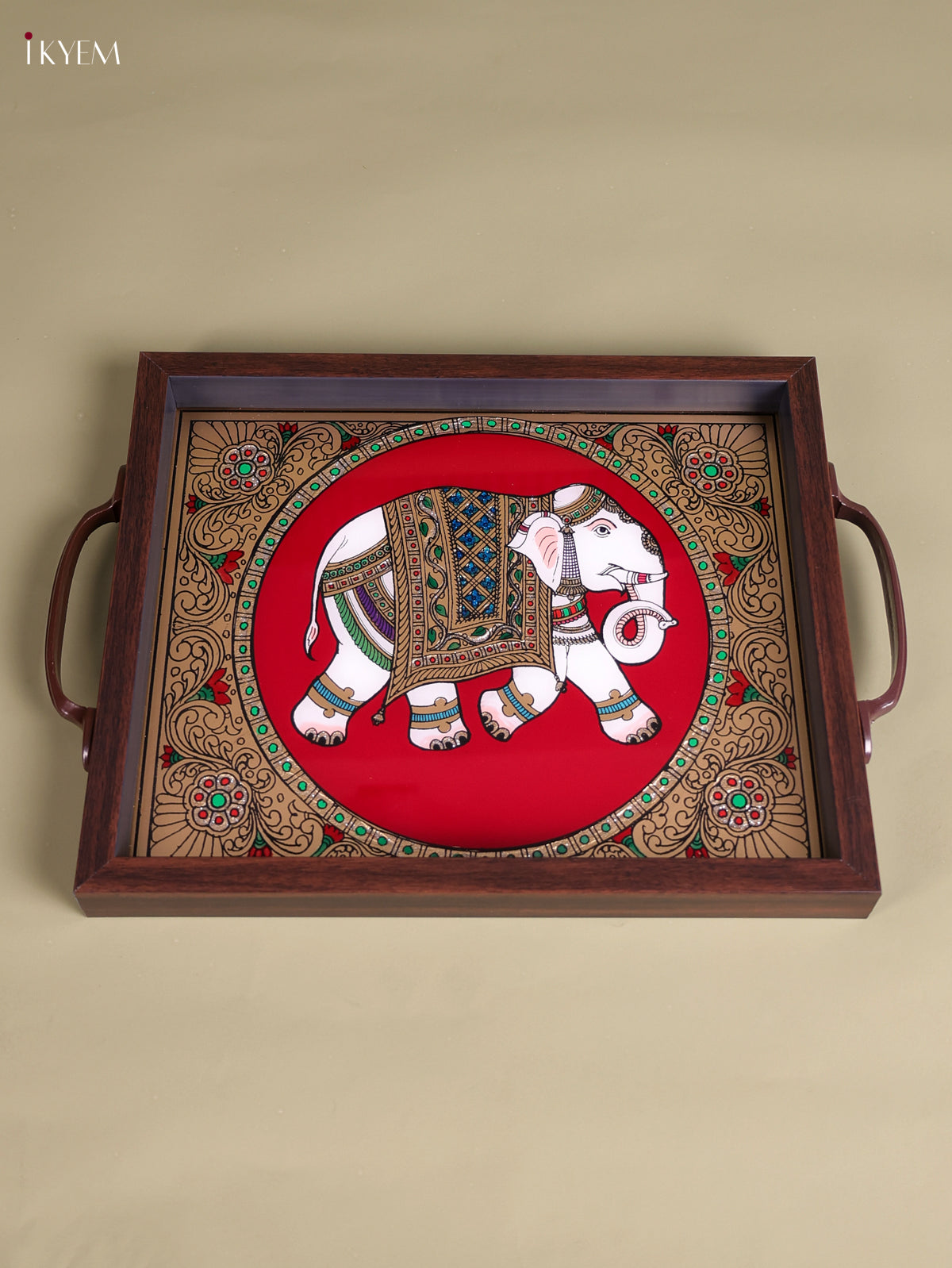
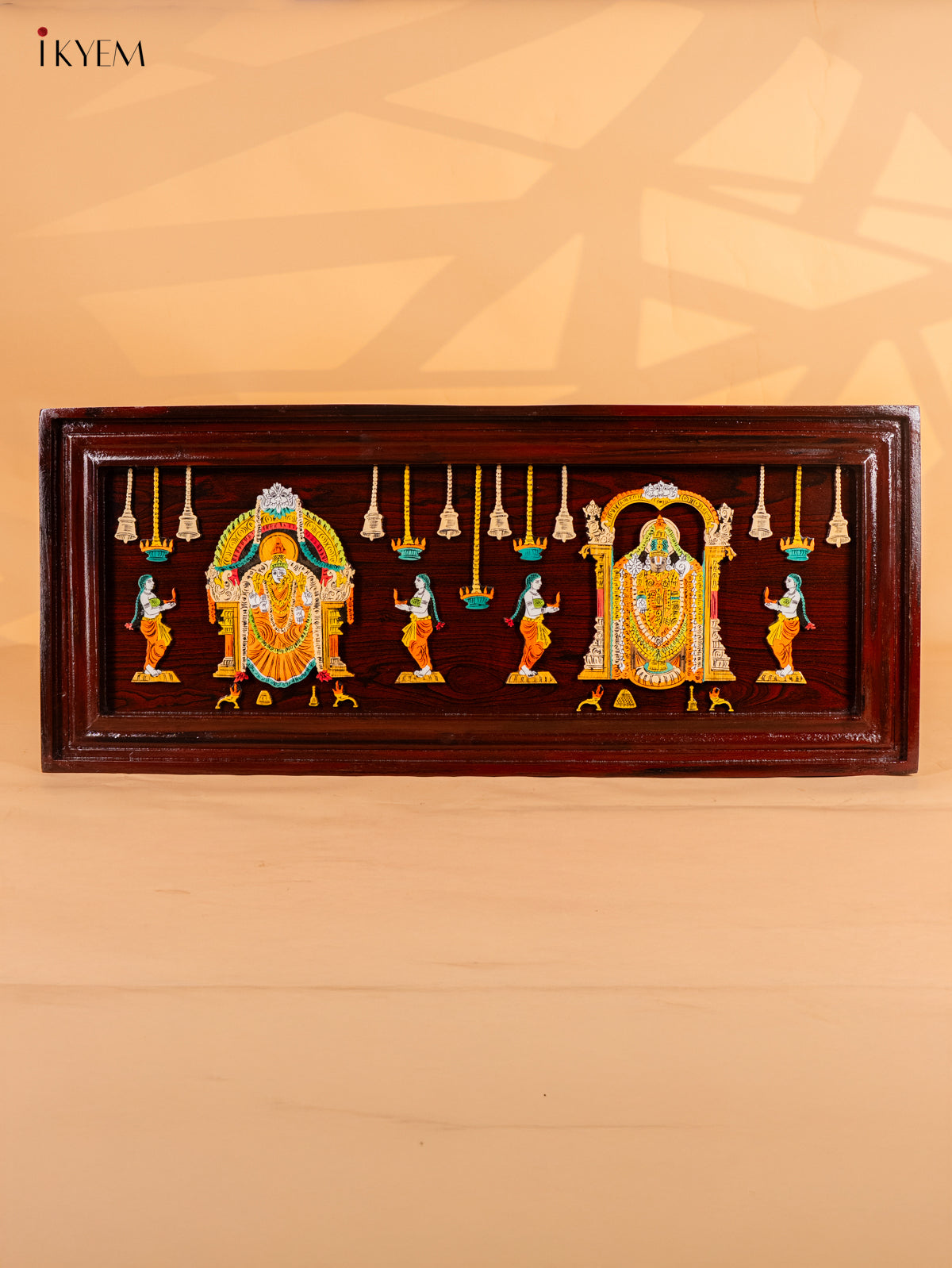

A traditional Tanjore painting is instantly recognizable for its luminous gold detailing, devotional imagery and richly ornamented composition. But there is another feature that makes it visually distinctive: its raised, three-dimensional relief work. Unlike a flat painting, parts of a Thanjavur artwork physically rise from the surface, creating texture, shadows & depth.
What Makes a Tanjore Painting Look 3D?

The three-dimensional appearance comes from raised decorative work applied over the prepared surface of the painting. Traditionally, artisans build up selected areas of the composition before adding decorative embellishments and gold work.
The relief is not applied randomly. It is carefully positioned to emphasize important elements such as crowns, jewelry, ornaments, arches & other intricate details. This creates a visual hierarchy, drawing attention to the central figure while giving the artwork its characteristic richness.
Why Is Relief Work Important?

Relief transforms the painting from a purely visual image into a textured artwork. When light falls across the raised portions, it creates subtle highlights and shadows. As the viewing angle changes, these details can appear differently illuminated.
This is one reason a Tanjore painting can look more dimensional in person than it does in a photograph.
The raised work also works together with the artwork's gold detailing. Gold catches and reflects light, while the relief creates physical depth. Together, they produce the distinctive luminous quality associated with traditional Thanjavur painting.
Where Is the Raised Work Usually Seen?
Relief work is particularly noticeable in jewelry, crowns, ornamental borders, decorative arches and other prominent details. In devotional compositions, these elements help give the central deity a more elaborate and ceremonial appearance.
The exact treatment can vary according to the artwork, artisan and composition. Therefore, not every Tanjore painting will have identical levels of relief or ornamentation.
Is Every Raised Painting a Tanjore Painting?
No. Raised or textured artwork alone does not establish that a painting is a Tanjore painting. A buyer should consider the complete visual and material characteristics of the artwork, including its composition, traditional decorative treatment, relief work, gold detailing & craftsmanship.
This distinction is important when buying traditional Indian art because surface texture can be reproduced using many modern techniques.
Why Does the Artwork Look Different Under Different Lighting?
Lighting plays a major role in how Tanjore paintings appear. Direct or angled light can highlight the raised areas and make the gold detailing appear more luminous. Softer lighting may create gentler shadows and a more subdued appearance.
That interplay between relief, ornamentation and light is a major part of the visual character of Tanjore painting.
A Painting Designed to Be Seen Beyond the Surface

The dimensional quality of Tanjore painting is not simply an ornamental feature. It is an important part of the craft's visual language. The raised relief gives the artwork depth, the gold creates luminosity & the intricate detailing adds visual richness.
That is why a Tanjore painting is best appreciated not merely as an image on a wall, but as a layered work of traditional Indian craftsmanship - where surface, light and artistry come together to create depth.